Translate

A következő címkéjű bejegyzések mutatása: Mochica. Összes bejegyzés megjelenítése

2015. december 22., kedd

ŐSI SZAVAINK: VILÁGÍT


Ősi szavaink: VILÁGÍT


A világít az egyik olyan  ősi szó, amelynek az eredete több mint bizonyos, hogy visszanyúlik az első modern emberek megjelenésének a korába Európában és Ázsiában.
A „vil/vir” szótő továbbképzett formái: vil-ág , vil-ágos , vil-ág-ít , vil-ág-os-ság vagy vér , ver-es…

A vil/vir vagy bil/bir/pir  rokon ősi gyökből egy sor fénnyel kapcsolatos szó alakult ki az eltelt idők folyamán.
pír , pir-kad., pir-kad-at , pir-os , pir-it…..

Ez a szó avagy hasonló kifejezési formája megtalálható az Indo.-Európai és a Finnugor nyelvekben , de messze túl nyúlik az Európai kontinensen. Az őseink magukkal vitték az Amerikai kontinensre.  Amerikában a Cendes-Óceán parti vidékén a Makro-Penutian ( Californian Penutian, Mayan, Mochican, Uru-Chipayan és Mapuchean ) nyelvi egységhez tartozó népek nyelveiben ma is megtalálható.
A szó egyfelől bizonyítja a  Makro-Penutian egység fennállását  és egyben a Magyar nyelv ősiségét, rokonságát ezen nyelvekkel..


VILÁGOS  „ Light / Bright „

- Hungarian :  

vil-ág , vil-ágos , vil-ág-ít , vil-ág-os-ság , 

- Sumer :  

bir / piriŋ „ bright „ , bar / paar „ white „ , bil / bil2 / bil3 „ to burn „ >

-  Proto-Indoeuropean : 

bherəg „ light „ (v>bh) >

- Finn-Ugrian:

 Zürjén : vir „ blood „ (l>r) , Udmurt : vir „ blood „ (l>r) , Osztják : wer/wir „ blood „ (v>w , l>r) , Cheremisz : vür „ blood „ (r>l)
b=v , r=l

Californian Penutian:

Plains M. : wel.i „ bright „ / wilep-y „ to shine „ ,
S.S.M. : we-la-nt „ light „ / wela’-t-st.l „ to shine „ , Mutsun : wiya „ light „ ,
Wintu : walu.qa „ to lighten „ , weloq „ red day „ ,
w>b>p = v , r>y  = l  , q = g

Mayan:

Proto-Mayan: *b'o7y
Itza Maya: b'o7oy  „shadow (que dan los a*rboles) „
Itza Maya: b'o7oy „ shadow (de persona o animal) „
Mopan: bo7oy „ shadow  (que dan los a*rboles) „
Mopan: bo7oy „ shadow (de persona o animal) „
b=v , y=l

Uru-Chipayan:

Uru : wali  sii-chay ( Muysken ) „light „
w = v

Mapuchean :

Mapuche:
pelo / pelontu „ light „ / wilüf külen „ shine „
 p=v


2015. december 19., szombat

THE MOCHICA (MUCHIK, CHIMU, YUNGA, YUNCA) LANGUAGE


THE MOCHICA (MUCHIK, CHIMU, YUNGA, YUNCA) LANGUAGE


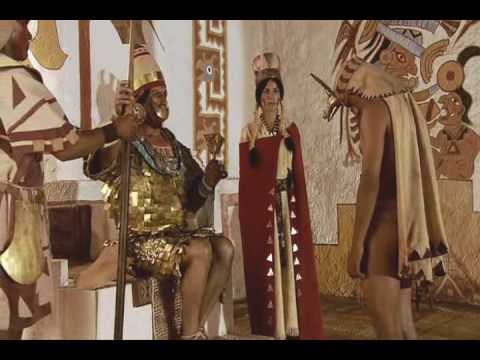
The Mochica society lives at the coats of North Peru before Christ.
They have made important civilizations. From the beginning of the time to AC 600 the capital of the Mochica culture was the city of Moche. Later the cenre became the city of Pampa Grande near the Lambeyegue River . (Lambeyegue or Sican culture). Later there was the Chimu culture from AC 900 to AC 1470. The population of the Chimu Empire’s capital was about 100.000 people.In 1664 this language was spoken by only 40,000 people because of the conquistadors.The Mochica language was the most important language in South America.It was firstly documented in 1607 (Ore).
The first important work was connected to the name of Fernando de la Carrera Daza in 1664.
His work is ’Yunga de gramática de la lengua’.
As a spoken language it extinced in 1950.
There were some attemption to rebirth the language . The he origin of the language and the society is ambigious. It was classified to the Chicha-Páez inguistic unit of the Páez language famailies – uncorrectly.
A ccording to Adelaar and Muysken in 2004 the Mochica language is an isolation.
Louisa Stark: the construction of the languages of the Mochica, Uru-Chipaya and the Mapuche family languages are similar to the Mayan languages. The ancestors of the Mochica, Uru-Chipayan and the Mapuche people moved to the coast of Peru.There are many features of the Mochica language which are similar to the Mayan language. It proves the common origin of them.The Mochica language is agglutinative.Construction of syllables: V, CV, VC or CVC.
Schmidt 1926: Mochica-Yunga-Tallan
The classification of the Mochica (Chimuan) languages :

    NORTHERN GROUP (CANARI - PURUHA)


+ 1. Canari
+ 2. Puruhua

    CENTRAL GROUP (TALLAN- SECHURA)


+3. Colan
+4. Catacao
+5. Sechura
+6. Olmos

C. MERIDIONAL GROUP

1. Mochica
2. Quingnam


THE URU - CHIPAYAN (CHIPAYAN, PUQUINA) LANGUAGES

THE URU - CHIPAYAN (CHIPAYAN, PUQUINA) LANGUAGES


The word ’Uru’ is originally Kechua, it means ’derogatory’, ’worm’.
Uru people called hem selves ’people of the water’. Their originally name is Cotsuny. According to them their ancestors are beings of water, not people.The language family is located in South Peru, the coast of North Chile, Lake Titicaca, Desaguadero River in Bolivia and the Lake Poopo.Uru people considerate them selves as the oldest type of humans.The Puquina language was a transmitter language (lingua Geral) in the 16 century in Peru.The Inca emperials spoke this language as well.The Proto_Puquina language was spoken in the Chiripa-Pucara culture from BC 200 to AC550. The Puquina language was spoken in the Tihuanaco culture from AC 500 to AC 1200. Itexcinted in the 18th century.The grammar origin of the Kallahuaya language is the Kechua language and some words originated from the Puguina language.
The Uru and the Chipaya languages have disappeared after the conquestadors because of the Aymara – Kechua and Spanish languages.Today Chipaya language is spoken by 2,000 people in Bolivia. The Uru language is almost excinted.
The Uru-Chpiaya languages were written down between 1900 and 1950.The agglutinative languages have a strong influence of Kechua, Aymara and Spanish.Earlier it was classified as apart of the Macro-Arawak language. Today is is tend to be alinguistic isolation and as a relative of the Mochica language.More linguistics think that there is a relationship between the Uru-Chipayan and the Middle American Macro-Mayan languages.Louisa Stark 1972: Mayan-ChipayanWheeler 1972: Mayan-Chipayan-AraucanChampbell: 1993: Mayan-ChipayanAccording to Benjamin Whorf the Mochica, Uru-Chipayan amd the Mapuche languages arein the same family and they are connected to the Middle American and the Californian Penutian languages.
 The form of the syllable in the Uru-Chipayan language can be CVCC or CCVC, but the most common forms are CVC and CV.

The classifiaction of the Uru-Chipayan languages:

URU-CHIPAYAN LANGUAGES

1. Uru (Kotsuny, Uruquilla) Bol.- Peru+
a.     Uchumataqu Bol.

+ b. Uru Chimu) Peruc.
c. Uru (Kotsuny) Bol
.d. Iru - ito Bol.
e. Uru - Murato Bol.
+ f. Urusmayo Arg.
+ g. Lipisa Bol.
2. Chipaya Bol.

 CHANGO (URU - ATACAMA, CHANGO - ATACAMA) SUB –GROUP :

+3. Chango Chile
+ 4. Camanchaca Chile
+ 5. Pro - Anche Chile
+ 6. Uru de la Costa Chile

PUQUINA SUB – GROUP :

+ 7. Puquina (Pukina) Peru - Bol.
8. Callahuaya Bol.- Peru


Chipaya women, Bolívia
Uros, Titicaca lake

2015. február 2., hétfő

FOTÓK A PERUI ŐSHONOS NÉPEKRŐL - FOTOS DOS POVOS INDÍGENAS PERUANOS


Jivaro
Yaminahua
Aymara

Jaqaru

Ticuna

Secoya

Aymara

Quechua ( Chinchorro )
Uros Lago-Titicaca
Cashibo

Achuar
Urarina
Yagua
Aguaruna
Ashaninca
Nahua
Cashanahua
Ese Ejja

Amahuaca

Chamicuro
Nahuas

Sharanahua

Shipibo

Iquitos

Bora
Jebero

Machiguenga

Quechua

Harakmbut

Marubo

Cocaima

Ocaina

Piro

Chimu

Mochica
Quechua , Lambayeque
Quechua , Ayacucho
Quechua , Cajamarca
Quechua , Pachitea
Jibaros
Matis
Aguaruna
Candoshi

Jibaros
Huambisa

Huari


Quechua , Ancash
Quechua , Cusco
Quechua , Margos Chaullan
Quechua , Chachapoya

Iquitos    

Machiguenga  
Chayahuita
Kashibo
Shipibo